2025 Tech Resolutions for Your Business To Thrive
In 2025, threats grow sharper and IT grows complex. FFT helps you secure, streamline, and scale with smarter, resilient foundations.
Every October, Cybersecurity Awareness Month serves as a national reminder that cybersecurity is no longer just the concern of IT departments—it’s a business-critical issue for every organization. As threats become more sophisticated, bad actors aren’t just targeting enterprise giants—they’re coming for mid-sized companies, startups, even small professional practices.
The cost of complacency? Data breaches, ransomware, regulatory fines, and worst of all—loss of trust.
At Fully Functional Technology (FFT), we believe that awareness isn’t just a checkbox—it’s your first line of defense. This month, we’re sharing practical, real-world cybersecurity tips that businesses of all sizes can adopt immediately.

Human error is responsible for over 85% of successful cyberattacks. Even the best security stack can’t compensate for an untrained workforce. Use a platform like KnowBe4 to regularly train your staff on phishing, social engineering, password hygiene, and safe web practices.
🔹 Pro Tip: Simulate phishing campaigns quarterly to measure real-world risk.
Remote work, BYOD policies, and IoT devices have created a sprawl of vulnerable endpoints. Deploy Endpoint Detection and Response (EDR) tools like Sentinel One to monitor, isolate, and neutralize threats before they escalate.
🔒 FFT’s Advanced Security Package includes managed detection & response, giving you 24/7 expert monitoring and peace of mind.


Most ransomware and credential theft starts with one thing: a bad email. Protect your business with inbound and outbound email filtering, attachment scanning, and encryption tools like INKY Email Protection Suite.
📩 Block threats before they ever hit an inbox.
If your team is still relying on sticky notes or reused passwords, you’re at serious risk. Adopt a tool like LastPass for secure password storage, sharing, and multi-factor authentication (MFA).
🔐 Combine this with company-wide MFA enforcement for critical systems.


Whether you’re in healthcare, finance, or government services, frameworks like HIPAA and NIST aren’t just regulations—they’re blueprints for building a resilient organization.
FFT provides custom security planning and compliance auditing, helping you meet and exceed these standards.
Unpatched software is one of the easiest ways for hackers to get in. Make sure your team has a documented process for updating operating systems, apps, firmware, and plugins.
⚙️ Automate patches wherever possible to avoid human delays.


It’s not if an incident will happen—it’s when. Create and routinely test a well-documented Incident Response Plan so your team knows how to respond calmly and effectively.
🗂️ Include emergency contacts, system backup steps, legal/compliance actions, and internal communications.
Engage in penetration testing and vulnerability scanning to uncover the gaps hackers are looking for. Think like an attacker, so you can defend like a strategist.
🛡️ FFT offers full-service vulnerability assessments as part of our security consulting packages.

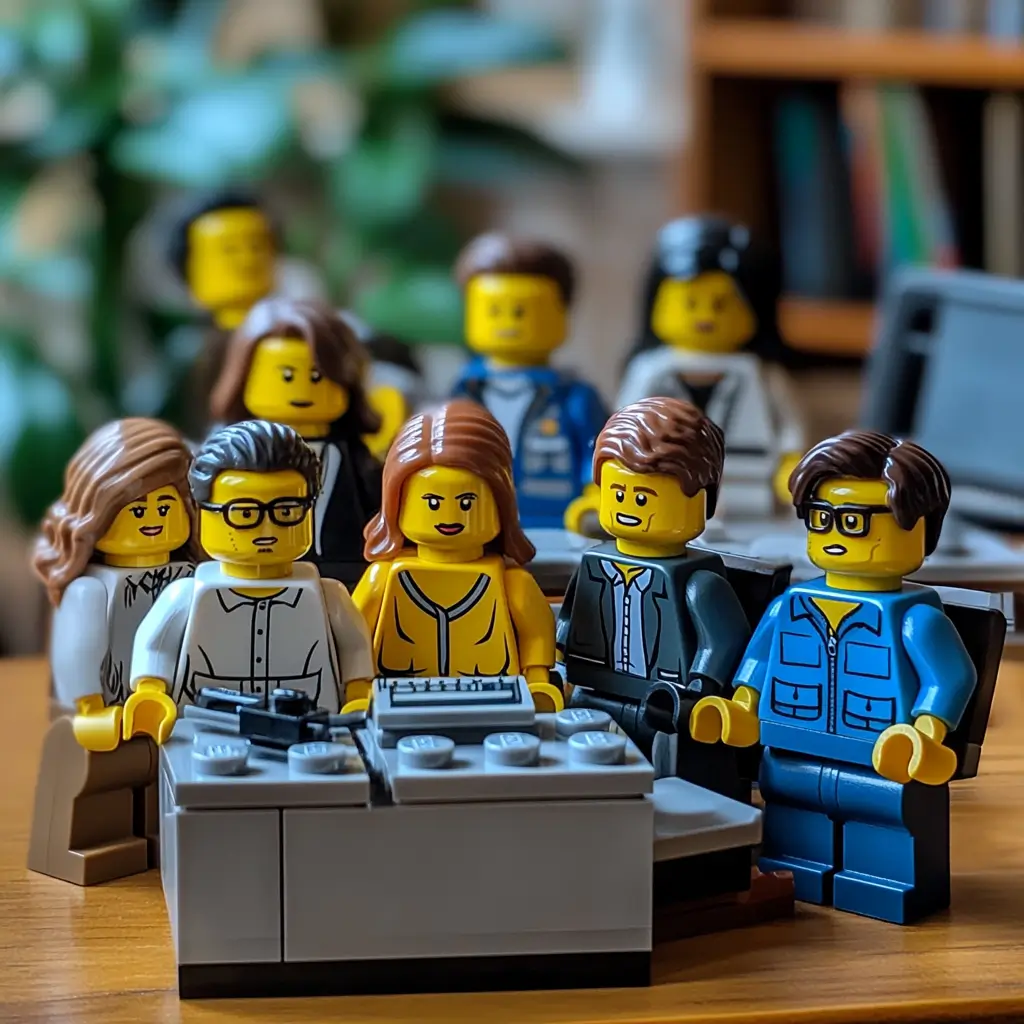
Security can’t be siloed in IT. When leadership models security-first thinking, it trickles down into policies, behavior, and culture. Celebrate wins, share updates, and keep security top of mind—year-round.
Cybersecurity isn’t just a product—it’s a practice. Most SMBs don’t have the bandwidth to manage it all alone. That’s where FFT comes in.
We provide concierge-level cybersecurity consulting, managed IT, and custom security solutions built to grow with you—whether you need basic training or enterprise-grade protection.

In 2025, threats grow sharper and IT grows complex. FFT helps you secure, streamline, and scale with smarter, resilient foundations.
A cyberattack isn’t if, it’s when. Learn how FFT helps you build a compliance-ready Incident Response Plan to safeguard people, data, and business.
Integrating video surveillance with access control protects people, compliance, and business continuity. FFT helps safeguard critical operations.
We firmly believe that the internet should be available and accessible to anyone, and are committed to providing a website that is accessible to the widest possible audience, regardless of circumstance and ability.
To fulfill this, we aim to adhere as strictly as possible to the World Wide Web Consortium’s (W3C) Web Content Accessibility Guidelines 2.1 (WCAG 2.1) at the AA level. These guidelines explain how to make web content accessible to people with a wide array of disabilities. Complying with those guidelines helps us ensure that the website is accessible to all people: blind people, people with motor impairments, visual impairment, cognitive disabilities, and more.
This website utilizes various technologies that are meant to make it as accessible as possible at all times. We utilize an accessibility interface that allows persons with specific disabilities to adjust the website’s UI (user interface) and design it to their personal needs.
Additionally, the website utilizes an AI-based application that runs in the background and optimizes its accessibility level constantly. This application remediates the website’s HTML, adapts Its functionality and behavior for screen-readers used by the blind users, and for keyboard functions used by individuals with motor impairments.
If you’ve found a malfunction or have ideas for improvement, we’ll be happy to hear from you. You can reach out to the website’s operators by using the following email
Our website implements the ARIA attributes (Accessible Rich Internet Applications) technique, alongside various different behavioral changes, to ensure blind users visiting with screen-readers are able to read, comprehend, and enjoy the website’s functions. As soon as a user with a screen-reader enters your site, they immediately receive a prompt to enter the Screen-Reader Profile so they can browse and operate your site effectively. Here’s how our website covers some of the most important screen-reader requirements, alongside console screenshots of code examples:
Screen-reader optimization: we run a background process that learns the website’s components from top to bottom, to ensure ongoing compliance even when updating the website. In this process, we provide screen-readers with meaningful data using the ARIA set of attributes. For example, we provide accurate form labels; descriptions for actionable icons (social media icons, search icons, cart icons, etc.); validation guidance for form inputs; element roles such as buttons, menus, modal dialogues (popups), and others. Additionally, the background process scans all of the website’s images and provides an accurate and meaningful image-object-recognition-based description as an ALT (alternate text) tag for images that are not described. It will also extract texts that are embedded within the image, using an OCR (optical character recognition) technology. To turn on screen-reader adjustments at any time, users need only to press the Alt+1 keyboard combination. Screen-reader users also get automatic announcements to turn the Screen-reader mode on as soon as they enter the website.
These adjustments are compatible with all popular screen readers, including JAWS and NVDA.
Keyboard navigation optimization: The background process also adjusts the website’s HTML, and adds various behaviors using JavaScript code to make the website operable by the keyboard. This includes the ability to navigate the website using the Tab and Shift+Tab keys, operate dropdowns with the arrow keys, close them with Esc, trigger buttons and links using the Enter key, navigate between radio and checkbox elements using the arrow keys, and fill them in with the Spacebar or Enter key.Additionally, keyboard users will find quick-navigation and content-skip menus, available at any time by clicking Alt+1, or as the first elements of the site while navigating with the keyboard. The background process also handles triggered popups by moving the keyboard focus towards them as soon as they appear, and not allow the focus drift outside of it.
Users can also use shortcuts such as “M” (menus), “H” (headings), “F” (forms), “B” (buttons), and “G” (graphics) to jump to specific elements.
We aim to support the widest array of browsers and assistive technologies as possible, so our users can choose the best fitting tools for them, with as few limitations as possible. Therefore, we have worked very hard to be able to support all major systems that comprise over 95% of the user market share including Google Chrome, Mozilla Firefox, Apple Safari, Opera and Microsoft Edge, JAWS and NVDA (screen readers), both for Windows and for MAC users.
Despite our very best efforts to allow anybody to adjust the website to their needs, there may still be pages or sections that are not fully accessible, are in the process of becoming accessible, or are lacking an adequate technological solution to make them accessible. Still, we are continually improving our accessibility, adding, updating and improving its options and features, and developing and adopting new technologies. All this is meant to reach the optimal level of accessibility, following technological advancements. For any assistance, please reach out to